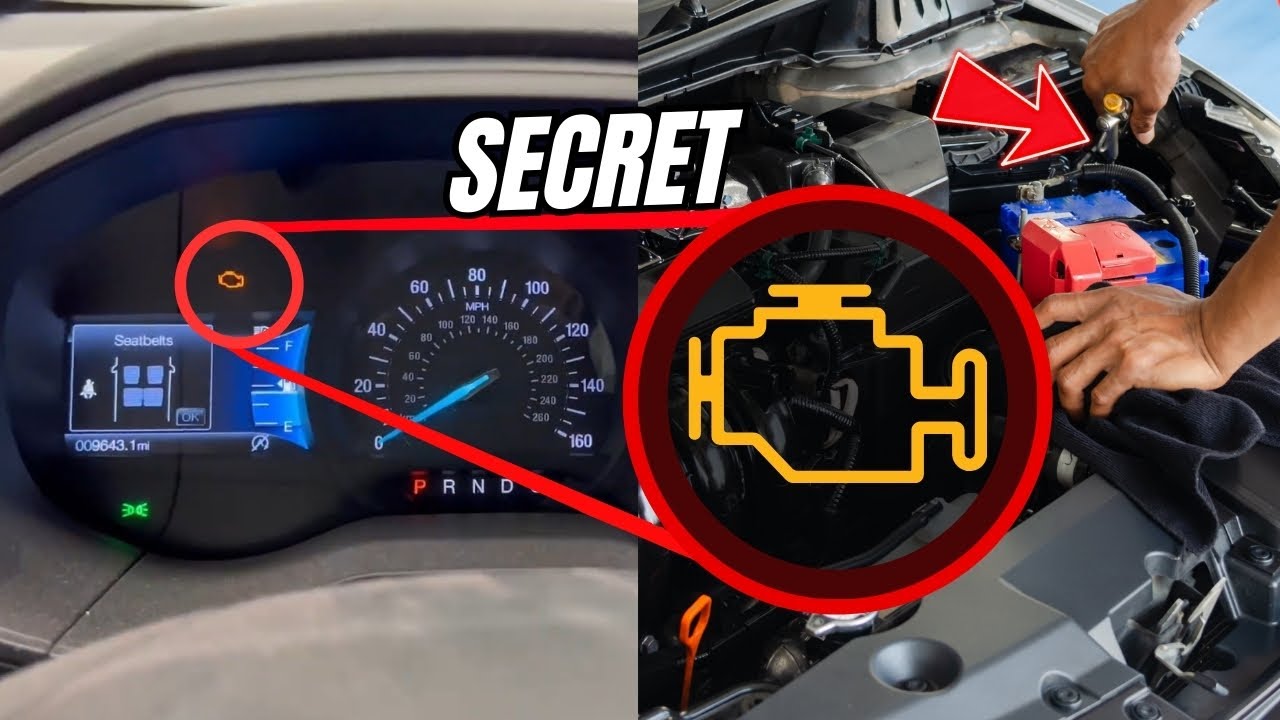
There are simple, free actions you can perform in minutes that often fix odd engine behavior, erase warning lights, and save you from unnecessary repair bills. Modern cars are computers on wheels. A minor sensor glitch or an adaptive value that got out of whack can cause poor performance or a warning lamp even when the underlying hardware is fine. The good news is many of those problems can be solved by resetting the right module and letting the car relearn normal behavior.
What a reset actually does
Think of your car like a network of small computers. The engine control module ECU, transmission control module TCM, body control module BCM, and dozens of sensors continuously exchange data. When a bad reading or temporary fault occurs it can be stored as a soft error or cause the system to adapt in a way that feels wrong.
Resetting clears those glitches, recalibrates sensors, and restores factory defaults in key systems. It is like rebooting your phone after it lags.
Result: cleared soft faults, restored idle and throttle behavior, and often the end of intermittent warning lights without a parts swap or shop visit.

Top reset techniques you can do at home
Below are the most effective reset methods, when to use them, and step by step instructions. Use the right one for the symptom you see.
1. Battery disconnect reset (classic and powerful)
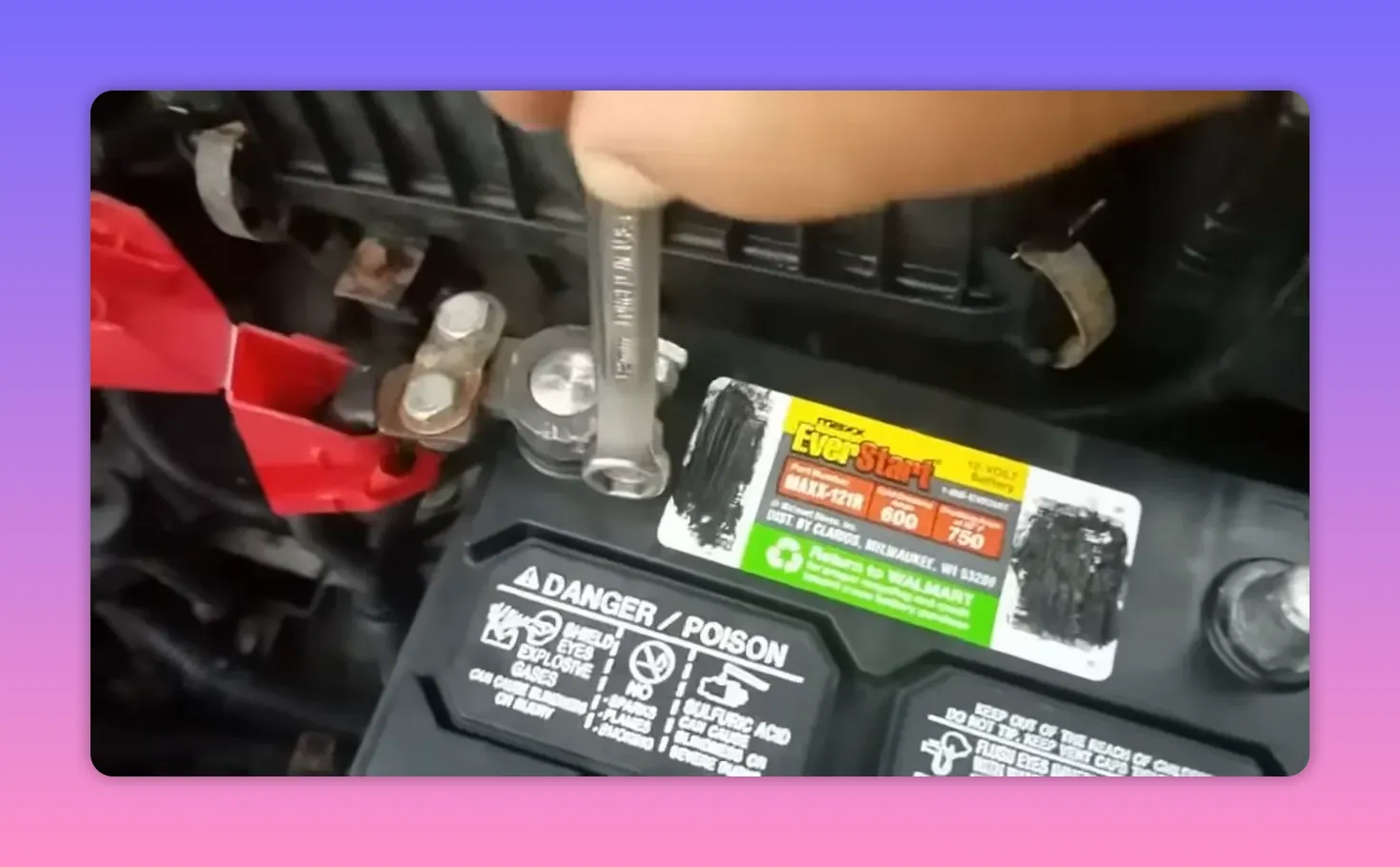
- Turn the engine off and remove the key.
- Disconnect the negative battery terminal.
- Press and hold the brake pedal for 30 seconds to drain residual power.
- Wait 15 minutes, then reconnect the battery.
This clears volatile memory in the ECU, forces the car to relearn idle, fuel trims, and throttle position, and will often remove check engine lights caused by minor sensor hiccups. You will lose clock settings and radio presets, but the reset is worth it for many drivability problems.
2. Ignition key trick (works on many older cars)
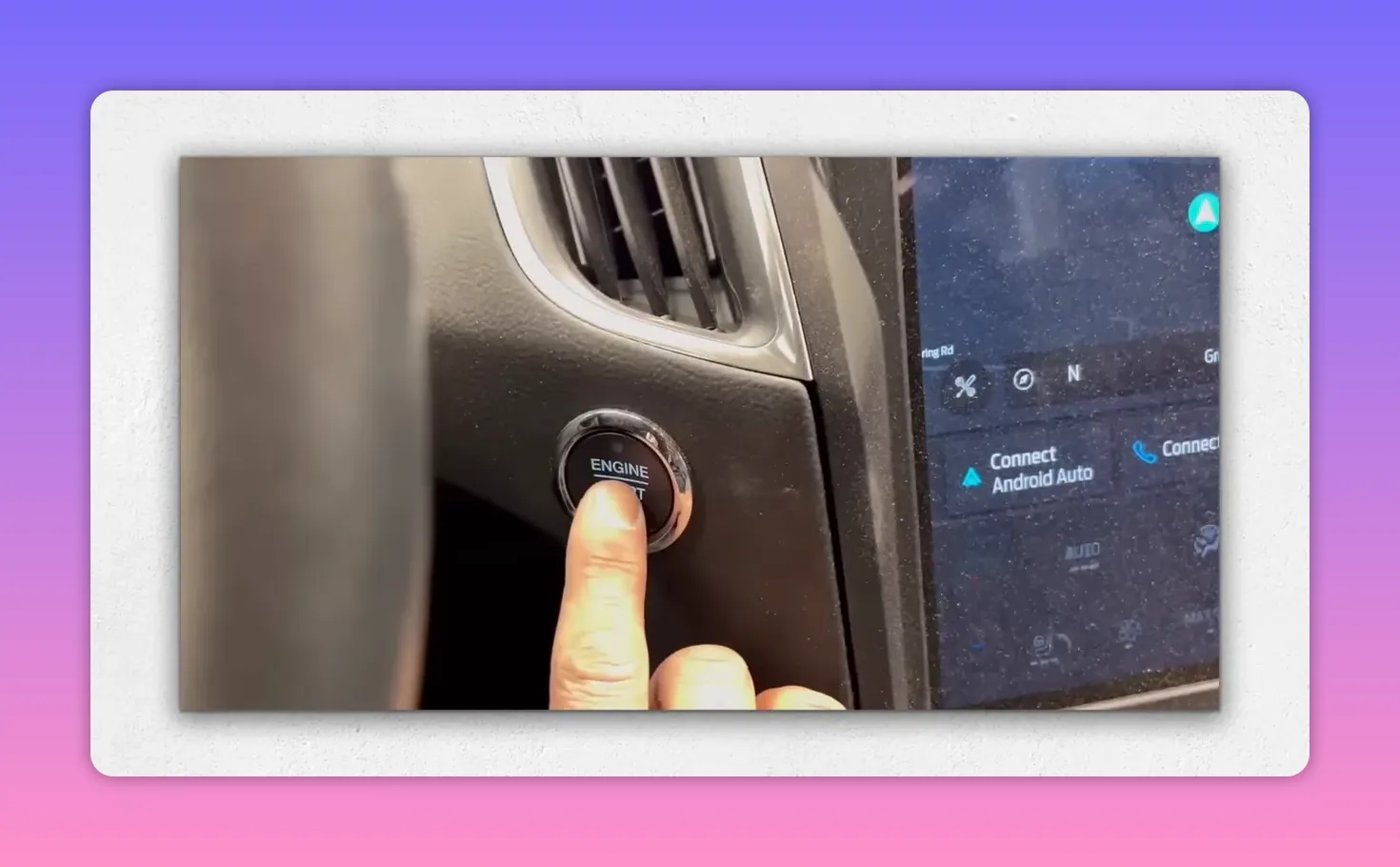
This reveals stored diagnostic codes and can clear intermittent ones on some vehicles.
- Insert the key and turn to the ON position without starting the engine.
- Cycle the key on and off three to five times, depending on the vehicle.
- Watch the check engine light as it flashes a pattern. For example, three blinks, pause, two blinks means code 32.
This is commonly useful on Chrysler, Dodge, Jeep, and older Ford models. Some intermittent codes clear themselves if the fault does not reappear after a few drive cycles.
3. Fuse pull reset (targeted reset for specific modules)
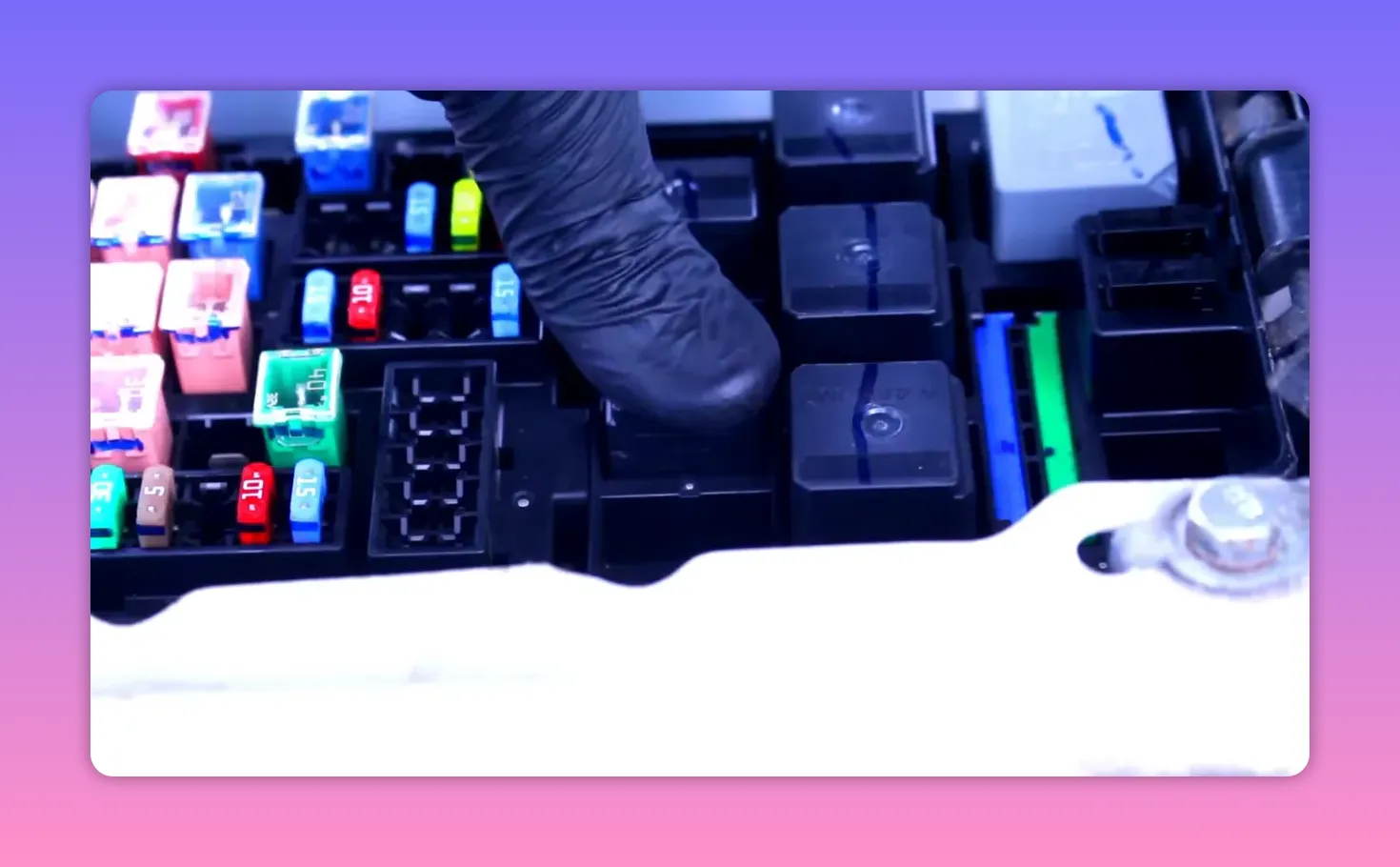
If you want to reset only the ECU, PCM, or TCU without disturbing everything else, remove the module’s fuse.
- Locate the fuse box under the hood or dash and find the fuse labeled ECM, ECU, PCM, or TCU.
- Remove the fuse and wait 10 to 15 minutes.
- Reinstall the fuse.
This clears memory in that module only and is great for recalibrating throttle or clearing codes after a repair.
4. Exit limp mode
Limp mode protects the engine or transmission when a sensor or system fails. Sometimes it remains active after the issue is fixed. A battery disconnect or fuse pull will often clear limp mode on vehicles such as Nissan, Volkswagen, and older BMWs. Only perform this after confirming the real fault has been repaired.
5. Reset transmission shift logic (TCM relearn)
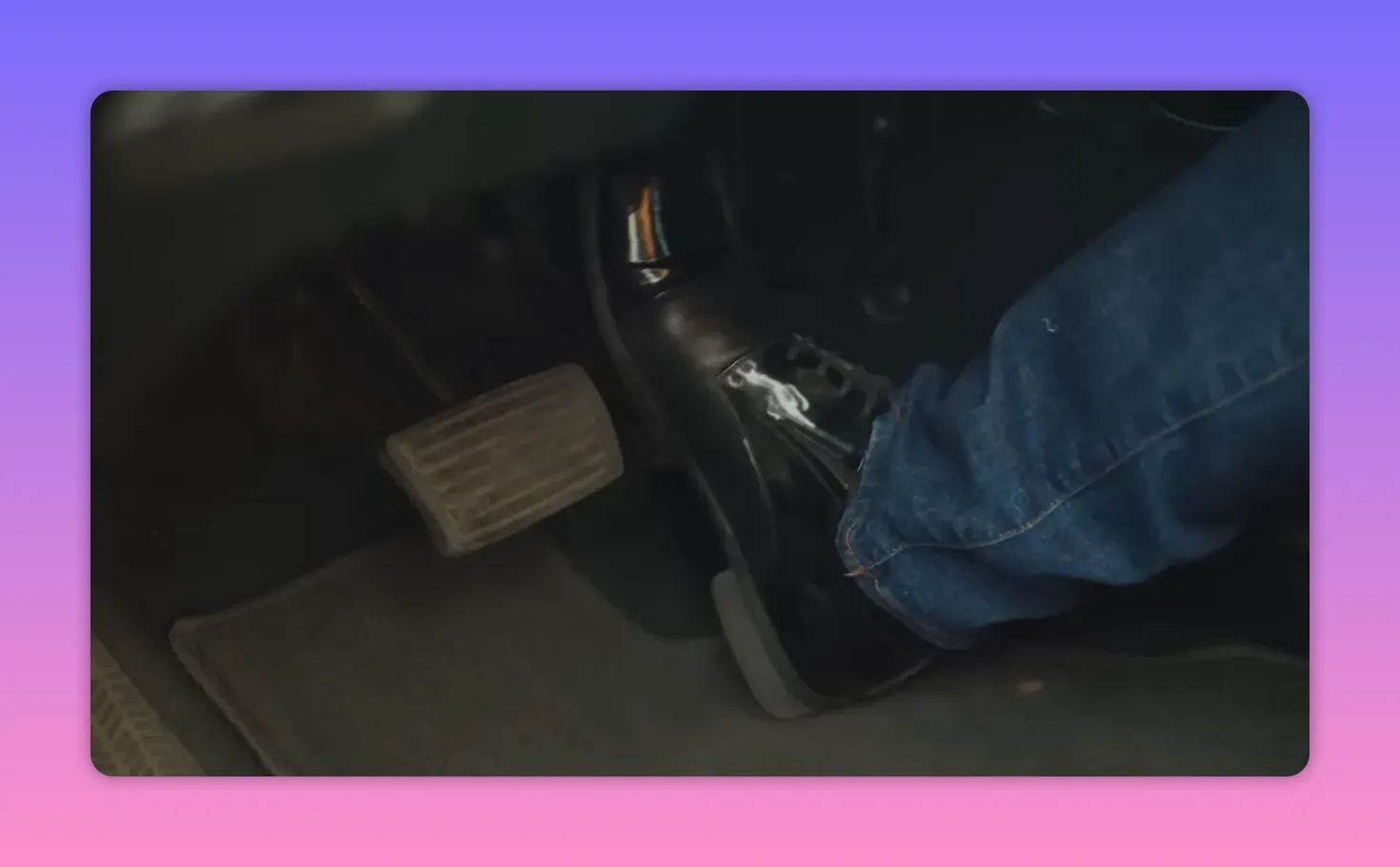
Modern automatic transmissions adapt to driving style. If shifts feel sluggish or inconsistent, a TCM reset can help.
- Turn the key to ON (do not start).
- Press the gas pedal to the floor and hold for 10 seconds.
- Turn the key off while still holding the pedal, then release the pedal.
- Wait two minutes before starting the car.
This sequence resets shift logic on many Nissan, Mercedes, and GM vehicles and often restores smoother, snappier shifts.
6. Throttle position sensor (TPS) reset
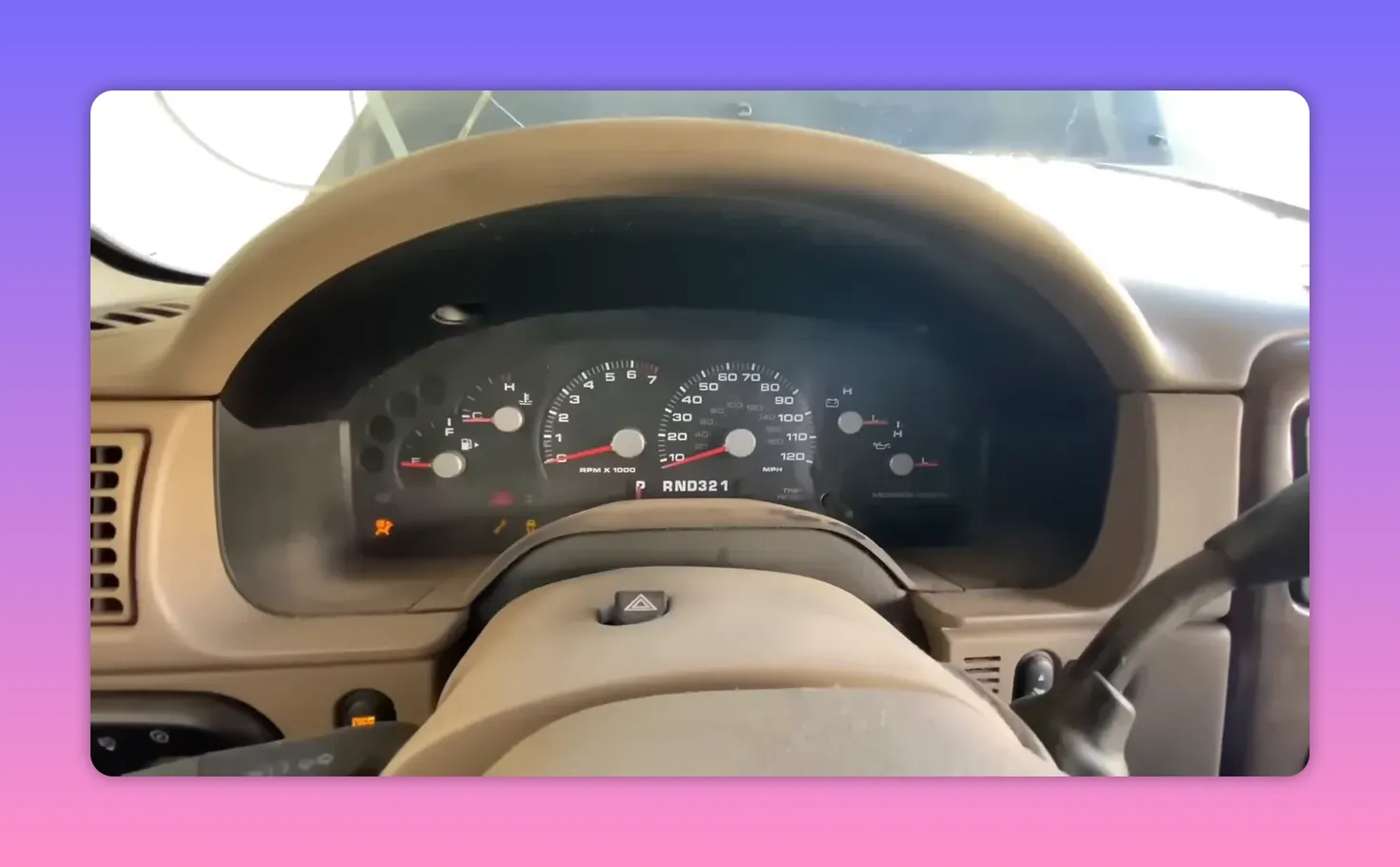
TPS problems cause jerky acceleration, idle surging, and poor throttle response. Some cars allow a manual TPS relearn.
- Turn the key to ON. Do not start the engine.
- Wait two seconds.
- Press the gas pedal to the floor and release five times.
- Wait 10 seconds, then start the engine.
This method works on many Toyotas, Hondas, and Nissans. Successful resets usually improve throttle response and idle stability.
7. Idle relearn after a battery reset
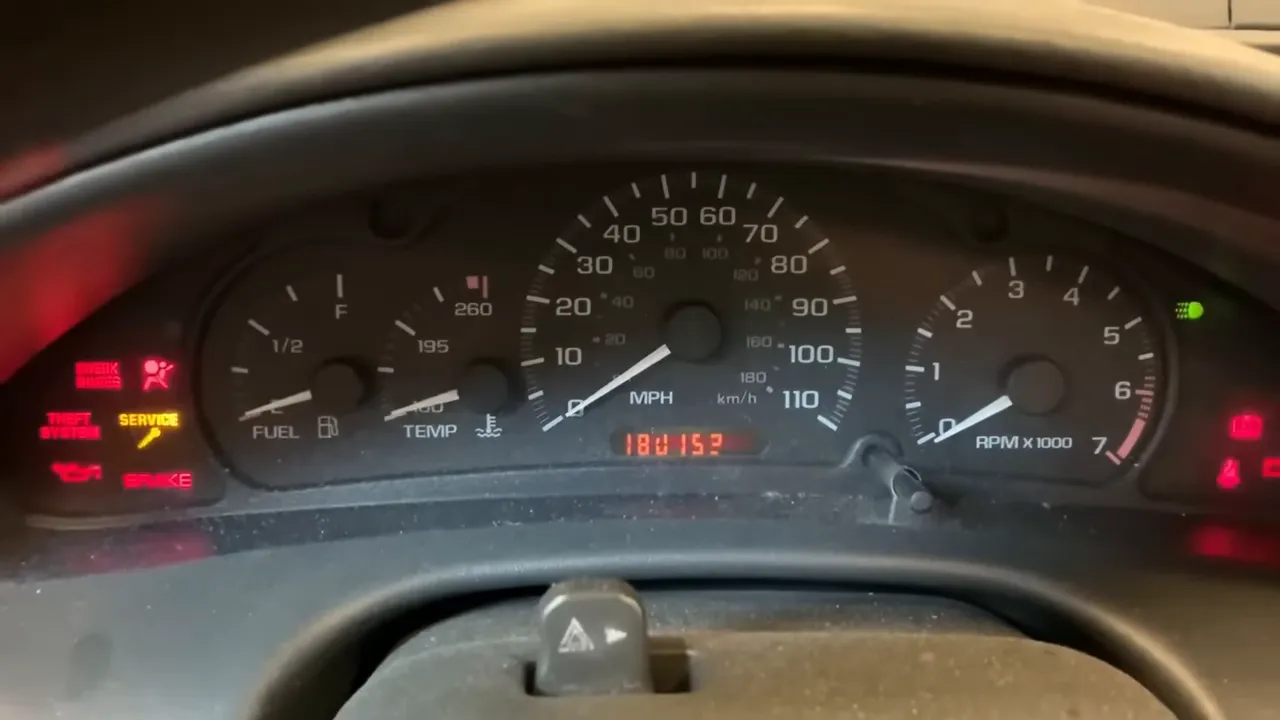
If the idle is rough after a battery disconnect, that is normal. The ECU lost learned idle trim and needs to relearn.
- Start the car with no AC or accessories on and let it idle for 5 to 10 minutes.
- Turn on the AC and let the engine idle for another five minutes.
- Drive gently for ten minutes so the ECU can relearn airflow, fuel trim, and idle timing.
Skipping this relearn often results in stalls, hesitation, and poor drivability.
8. Reset TPMS warning lights
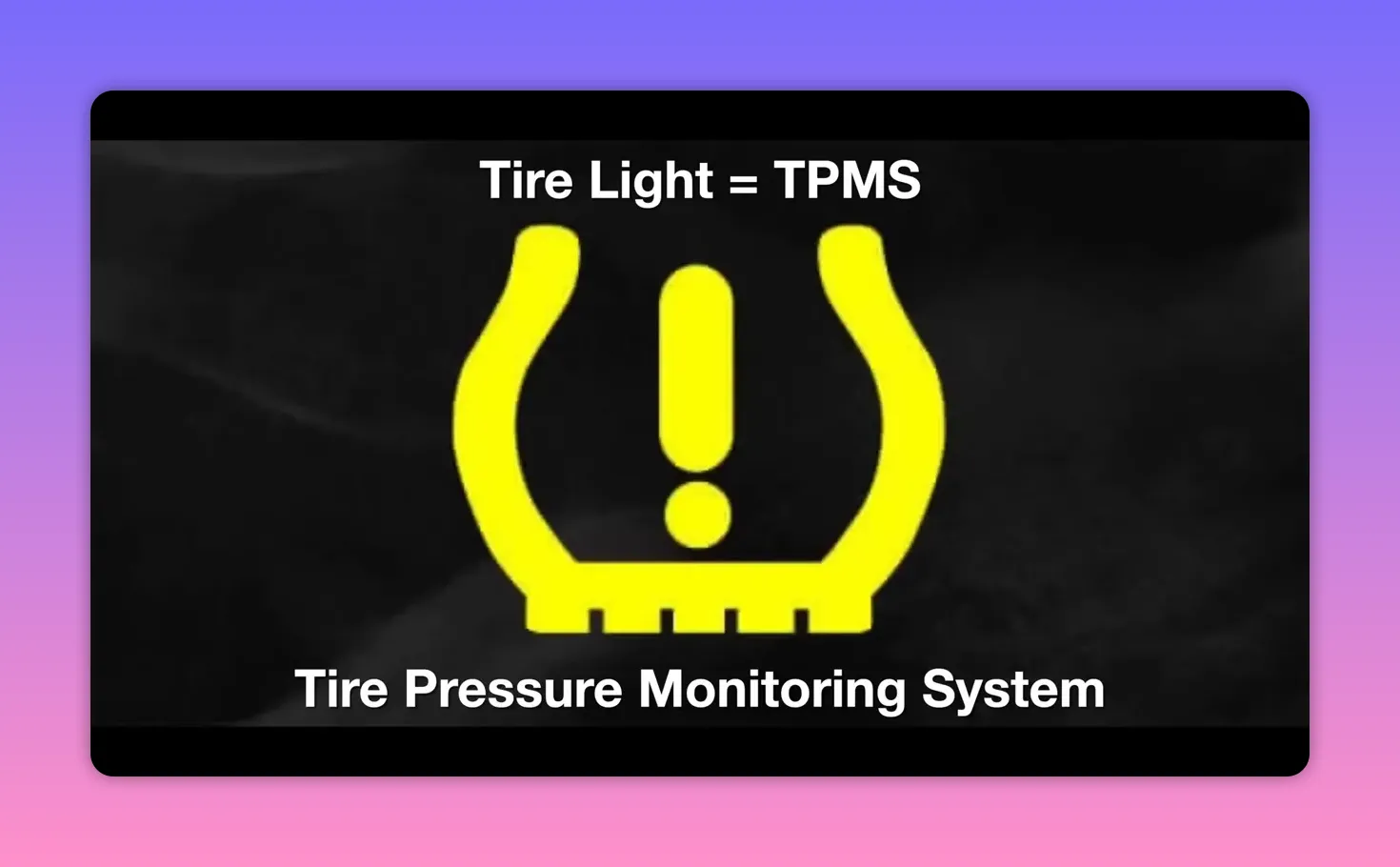
If the tire pressure light stays on after inflating tires to spec, reset the TPMS.
- Inflate all tires to the correct pressure.
- Turn the ignition to ON and press the TPMS reset button, usually under the dash.
- Wait for the light to blink three times, then release the button.
- Drive for about 10 minutes at 30 mph or more; the light should go out.
If the light persists, a sensor may be failing or a spare sensor may not be transmitting.
9. Reset maintenance required lights without a scan tool
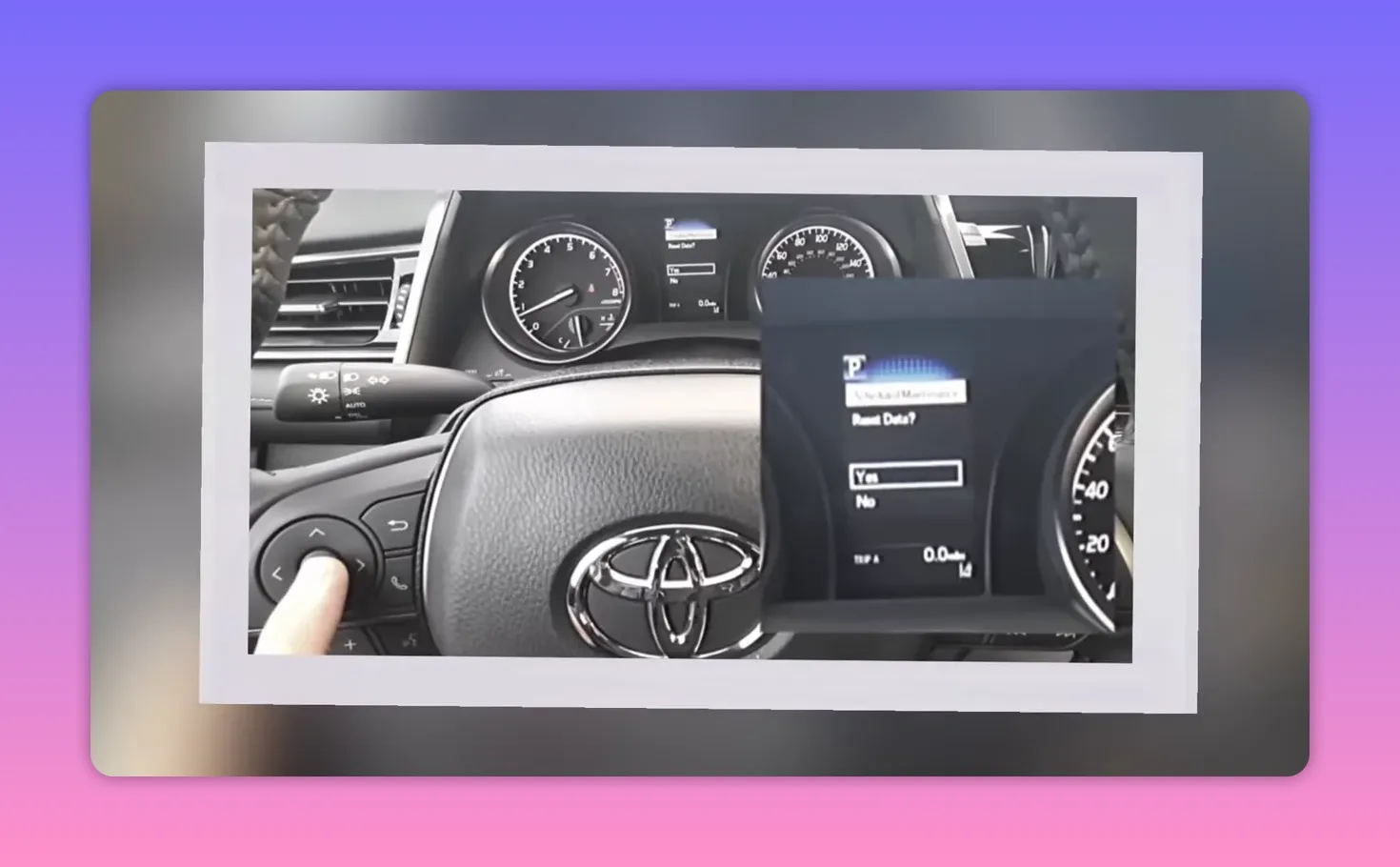
Service reminder lights are not the same as check engine lights. They are user-resettable on most makes.
Example for Toyota:
- Turn the key to ON without starting the engine.
- Press and hold the trip meter button and turn the key OFF.
- While holding the button, turn the key back to ON and wait until dashes disappear or 00000 shows.
Different brands use variations of this sequence but the steps are usually DIY friendly.
OBD2 tools and apps that make you feel like a pro
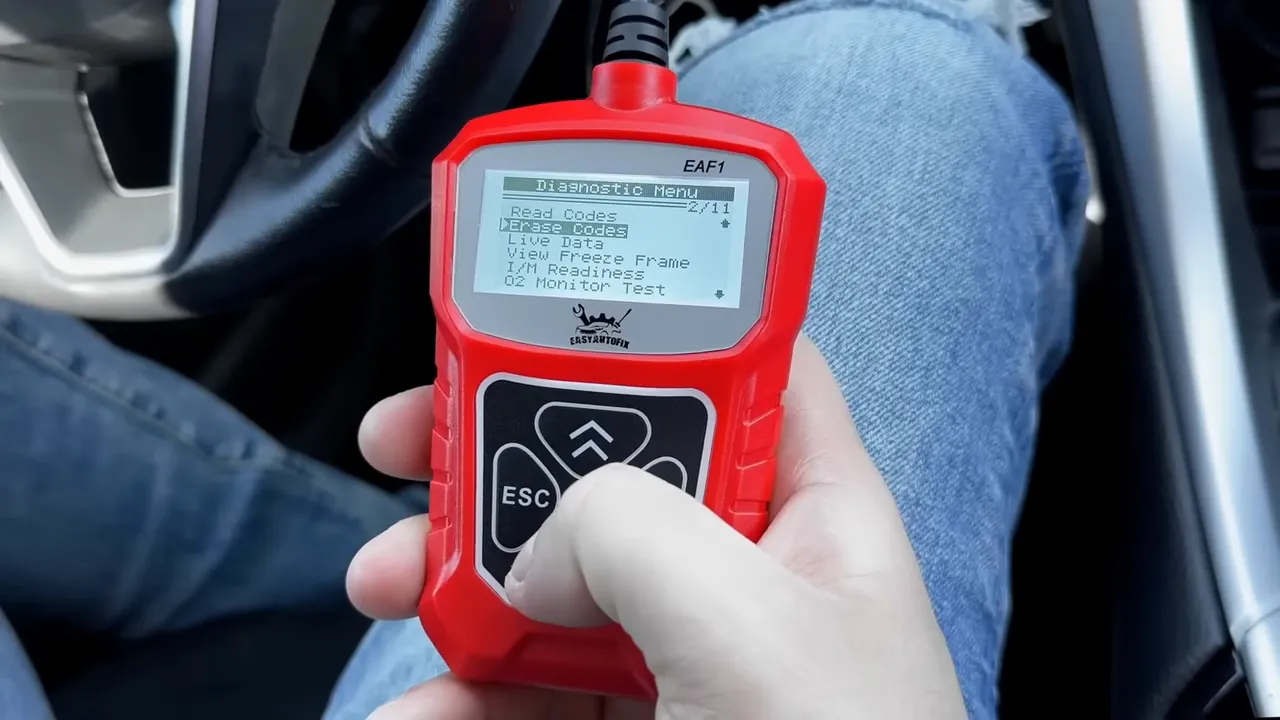
Basic OBD2 scanners can be had for $20 to $30 and will read and clear codes. Bluetooth options like OBD Link LX and FIXD provide live data, freeze frames, and maintenance logs. Apps such as Carista and BimmerCode can access deeper systems including ABS and SRS on some cars.
Common codes you can often fix yourself: loose gas cap P0455, misfire P0300, O2 sensor P0131. Research the code, make the repair, and clear the code yourself. Keep a basic scanner in the glove box for instant diagnostics.
When not to reset
Resets are powerful but not a cure for serious mechanical problems. Do not use resets to mask real failures. Avoid resetting when:
- Your engine is overheating.
- There is visible fluid loss.
- The transmission is slipping or jerking severely.
- You smell smoke or burning.
Reason: resetting hides symptoms but does not repair physical damage. If symptoms point to a major failure, diagnose and repair first.
Safety systems and specialized resets
ABS and SRS codes
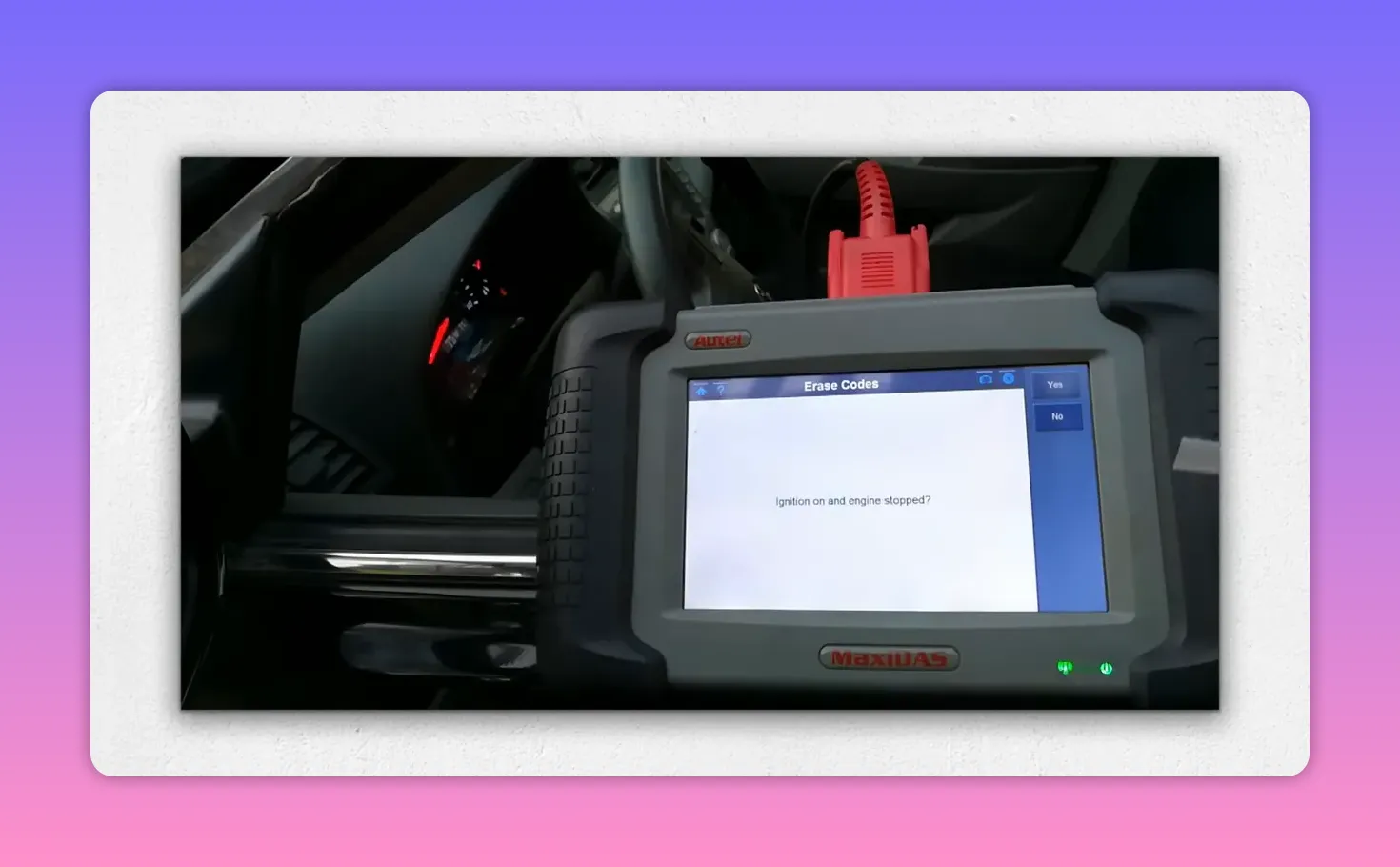
Brake and airbag systems often require factory-level scanners. Generic tools usually cannot clear these codes, though certain Bluetooth apps may for some brands. Because these systems are safety related only clear codes after a verified repair, not to hide a problem.
Factory reset for infotainment
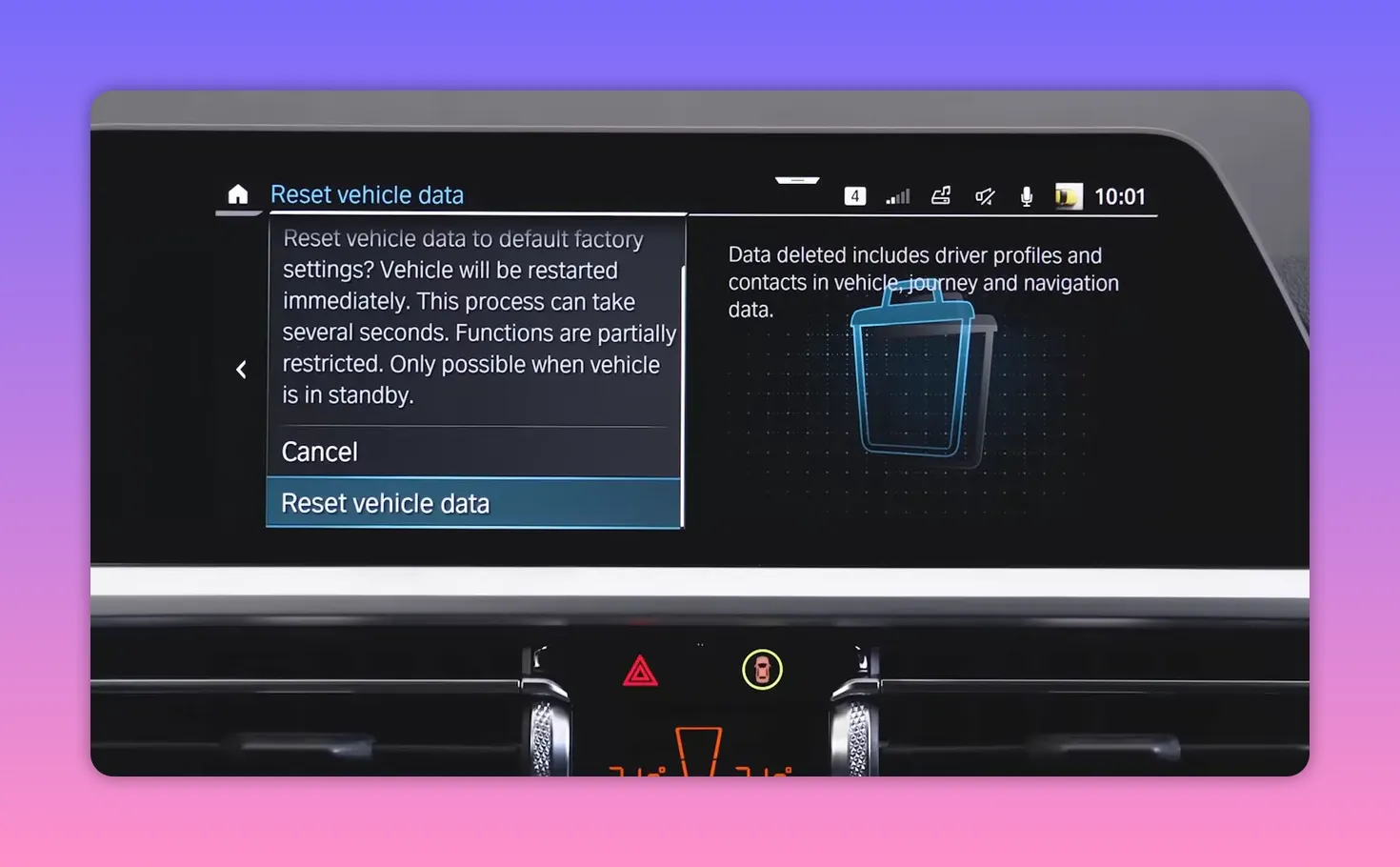
Some cars offer a full factory reset through the infotainment screen. This clears paired phones, driving data, and user preferences. It does not reset ECU modules but is handy before selling a car or if the head unit acts buggy.
CVT relearn
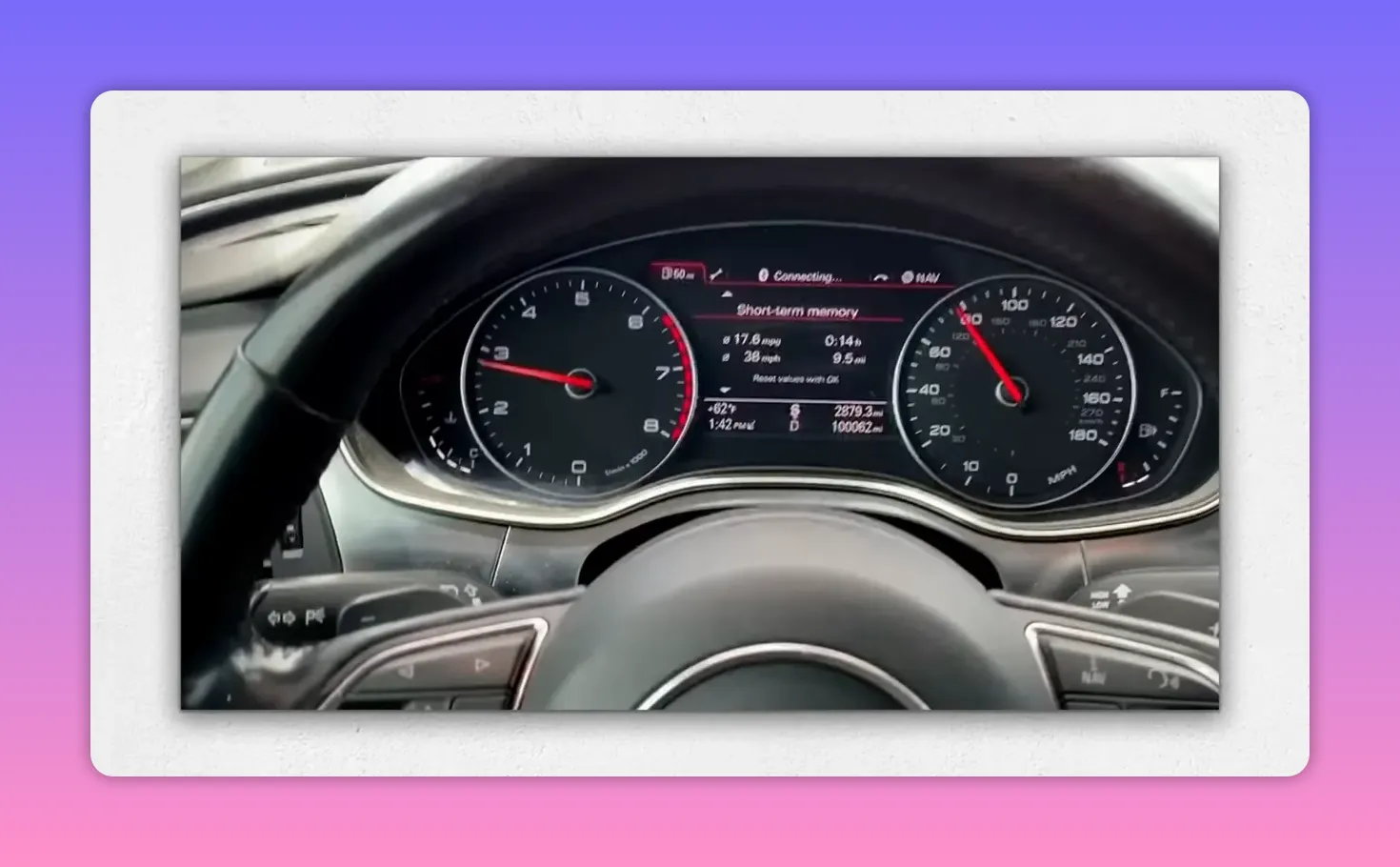
Continuously variable transmissions learn driving behavior. If a CVT feels sluggish warm the engine, drive at a steady throttle, and perform firm accelerations and decelerations three to five times. Some models need scan tools but many will adapt automatically over a few days.
HVAC recalibration
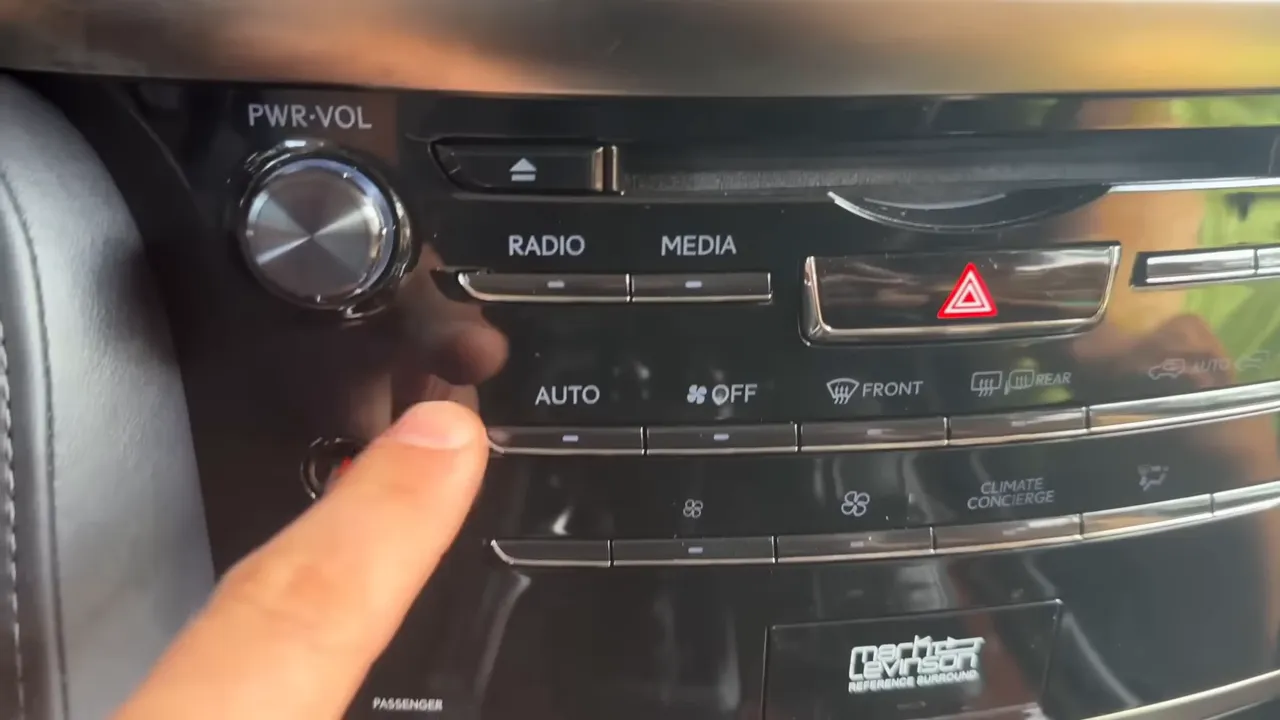
Weird AC or heater behavior is often a blend door or actuator calibration issue. For many cars press and hold the recirculate and rear defrost buttons for five seconds with the ignition on. Listen for vents cycling as the system recalibrates.
Steering angle sensor reset
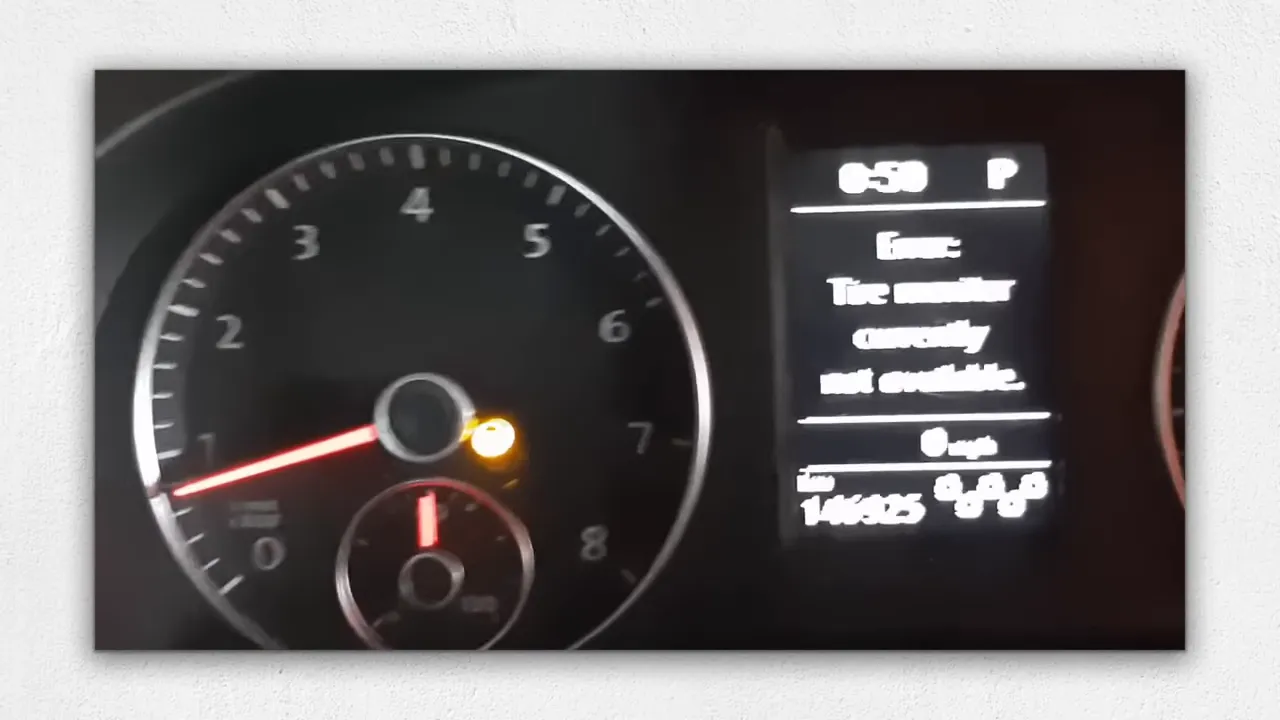
After an alignment or battery disconnect, traction and stability warnings can appear if the steering angle sensor is off. To recalibrate:
- Start the engine.
- Turn the steering wheel fully left, then fully right.
- Center the wheel and drive straight for 10 seconds. The system should auto-calibrate.
Keep a reset log

Every reset you perform is useful data. Note the date, what was reset, and which symptoms improved or did not. If a problem returns after a reset, the fault is likely real and not a temporary glitch. A log helps with later diagnostics and gives a clear record if you take the car to a shop.
Final tips and safety reminders
- Start simple. Try targeted resets before replacing parts.
- Document everything in a reset log to spot recurring issues.
- Use an OBD2 reader for reliable diagnostics and to avoid unnecessary work.
- Do not use resets to hide serious problems. If it smokes, leaks, or overheats get professional help.
These reset methods give drivers more control and can often restore performance without spending a dime. When used responsibly they save time, money, and worry. If a reset cures a problem, great. If it does not, your reset log and basic OBD2 data will make the next diagnostic step much clearer.


